Crinia tasmaniensis
Tasmanian Froglet
Distribution
:quality(60)/https%3A//media.frogid.net.au/media/dd/images/g2sufeqs7iww0tio1fuq.7e82bb0.png)
Conservation Status
What does it mean?
 Federal Conservation Status (EPBC Act)
IUCN Red List
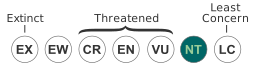 Near Threatened
Frog Calls
Call recorded by Grant Webster
Call recorded by Jane Byrne
Calling Period
- Jan
- yes
- Feb
- yes
- Mar
- yes
- Apr
- yes
- May
- possible
- Jun
- yes
- Jul
- yes
- Aug
- peak
- Sep
- peak
- Oct
- peak
- Nov
- peak
- Dec
- peak
Species Information
Description
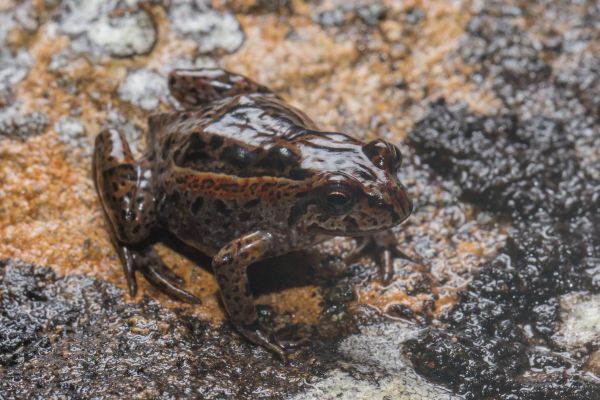
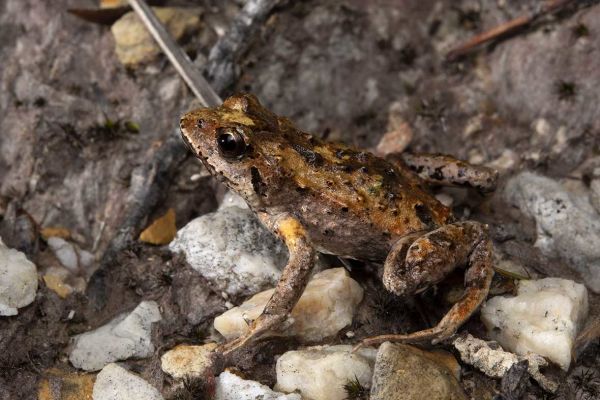
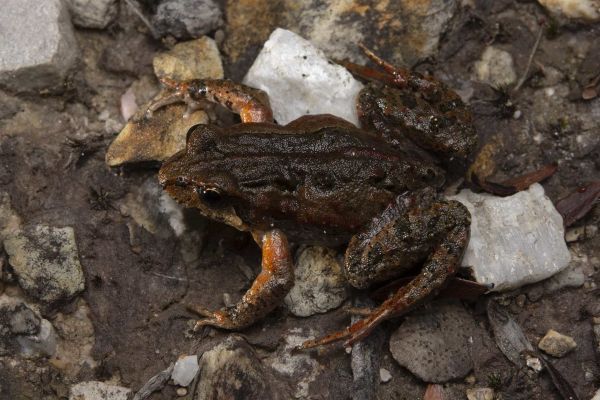
A small species of frog reaching up to nearly 3 cm in body length. A highly variable species, it has a grey, brown or brown-orange back, with or without longitudinal stripes or patches. There is often a V-shaped patch between the eyes. The belly is white with black or grey spots, or black and white marbling, and there is often bright red on the lower half of the belly and on the under-surface of the legs.
The pupil is horizontal, and the iris is gold. Fingers and toes are unwebbed, both without discs.
Habitats
Occurs near ponds, streams, and ditches, most often in woodland and mountainous rocky areas.
Breeding Biology
Eggs are laid singly in temporary pools, where they sink to the bottom of the water. Tadpoles can reach a total length of up to 3 cm, and are dull-gold or dark brown in colour. Tadpoles remain at the bottom of water bodies, and take three to four months to develop into frogs.
Breeds during spring to summer.
Similar Species
Looks similar to Crinia signifera, Crinia nimba, and Geocrinia laevis in its distribution, but these species lack bright red patches on the lower half of the belly and under-surface of the legs.