Cyclorana occidentalis
Western Water-holding Frog
Distribution
:quality(60)/https%3A//media.frogid.net.au/media/dd/images/vshc1aojoftxgjrirncy.c7f140c.png)
Conservation Status
What does it mean?
 Federal Conservation Status (EPBC Act)
IUCN Red List
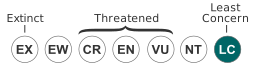 Least Concern
Frog Calls
Call recorded by Ryan Ellis
Calling Period
- Jan
- yes
- Feb
- yes
- Mar
- yes
- Apr
- No calling
- May
- No calling
- Jun
- No calling
- Jul
- No calling
- Aug
- No calling
- Sep
- No calling
- Oct
- No calling
- Nov
- yes
- Dec
- yes
Species Information
Description
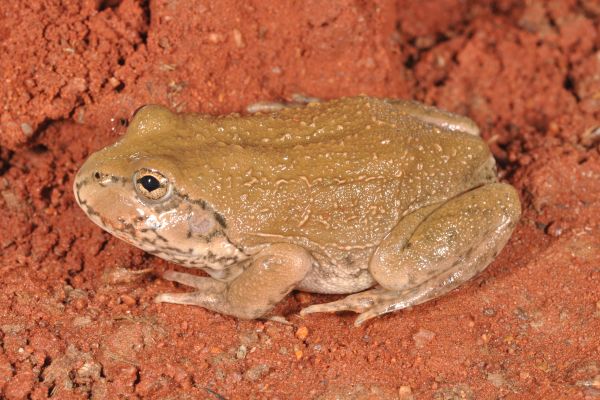
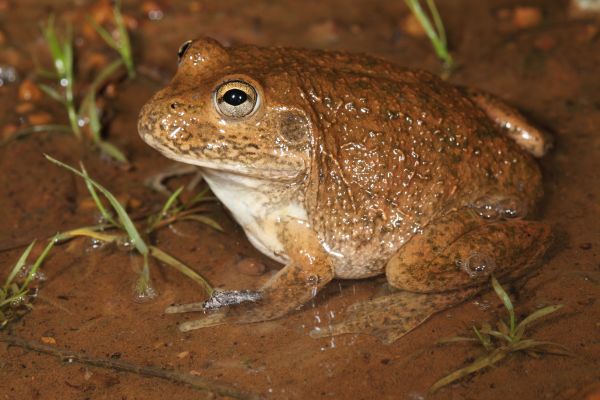
A large species of frog that can reach up to 11 cm in body length. It has a yellow-brown or yellow-orange back, with darker yellow and grey specks. The sides are cream-coloured. The belly is white.
The pupil is horizontal, and the iris is gold. Fingers are unwebbed and toes are fully webbed, both without discs. It has the amazing ability to live underground for years in a burrow without water, creating a water-holding cocoon of skin around its body to prevent it from drying out. This frog became a new species in 2017 after originally being identified as the western form of Cyclorana platycephala.
Habitats
Occurs in arid areas and mallee with clay soil.
Breeding Biology
Eggs are laid as large clusters under the surface of the water in flooded claypans and temporary pools. Tadpoles can reach a total length of up to 8.5 cm, and are clear gold in colour. They swim at all depths of water bodies, and take around one month to develop into frogs.
Breeds during summer after heavy rain.
Similar Species
Does not look similar to any other species in its distribution.