Geocrinia sparsiflora
Otway Smooth Frog
Distribution
:quality(60)/https%3A//media.frogid.net.au/media/dd/images/wxgenowyt8o3mpwcjkci.66be1db.png)
Conservation Status
What does it mean?
 Federal Conservation Status (EPBC Act)
IUCN Red List
 Not Evaluated
Frog Calls
Call recorded by Thomas Parkin
Calling Period
- Jan
- yes
- Feb
- yes
- Mar
- peak
- Apr
- peak
- May
- peak
- Jun
- yes
- Jul
- yes
- Aug
- possible
- Sep
- possible
- Oct
- possible
- Nov
- possible
- Dec
- possible
Species Information
Description
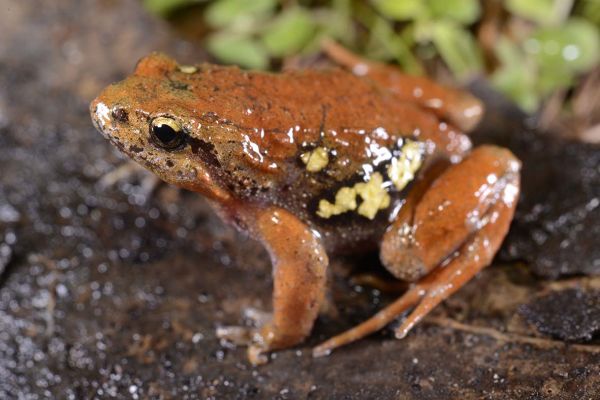
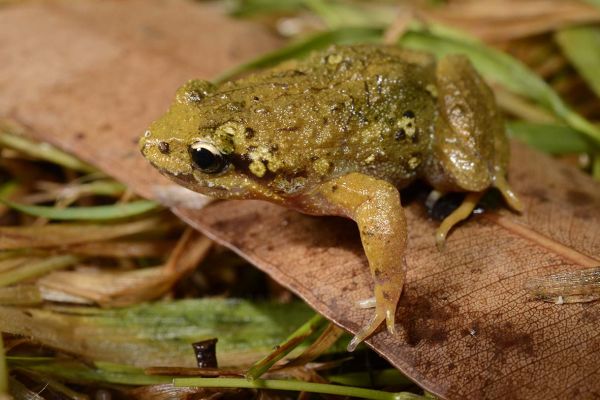
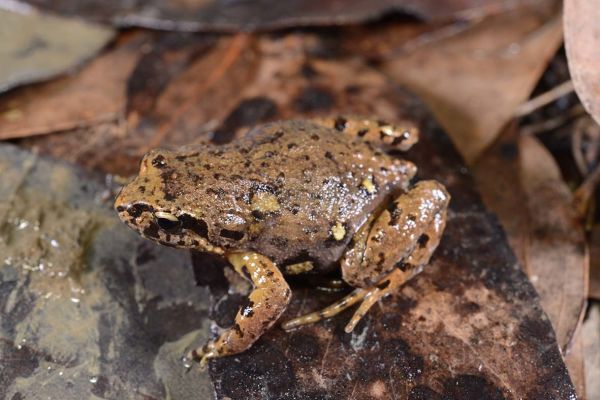
A small frog species reaching up to 3.5 cm in body length. Highly variable in colour, ranging from golden-yellow, red-orange, to brown sometimes with bright yellow or white spots, blotches or ocelli encircled with black. Dark stripe from the tip of the snout to behind the eye. The belly is blue-grey to fleshy pink usually with dark spots, blotches or reticulations. Fingers and toes are unwebbed, both without discs. This species was previously considered to be Geocrinia victoriana but recent research led by the Australian Museum and using FrogID recordings (published October 2023) has revealed the two species to be distinct.
Habitats
Rainforest, wet and dry sclerophyll forest, agricultural land and suburban parklands.
Breeding Biology
Eggs are laid terrestrially as globular egg masses which stick to matted reeds, vegetation or debris beneath leaf litter or at the base of tussock grasses. Males are often found near the egg masses which may contain multiple clutches of eggs in varying stages of development. Larval development spans 150–178 days with metamorphosis usually occurring in spring following flooding of the terrestrial nest. Tadpoles then hatch and complete their development aquatically. Breeds during late summer to autumn.
Similar Species
Looks similar to Crinia signifera, Crinia parinsignifera, Pseudophryne semimarmorata, and Geocrinia laevis within its distribution, but has a different call.