Carichyla bicolor
Northern Sedge Frog
Distribution
:quality(60)/https%3A//media.frogid.net.au/media/dd/images/pzzvfrigighiqirvdl7y.418b487.png)
Conservation Status
What does it mean?
 Federal Conservation Status (EPBC Act)
IUCN Red List
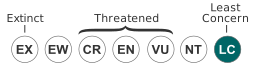 Least Concern
Frog Calls
Call recorded by Dane Trembath
Call recorded by Dane Trembath
Call recorded by Paul Doughty
Call recorded by Justin McMahon
Call recorded by Keith McDonald
Calling Period
- Jan
- peak
- Feb
- peak
- Mar
- peak
- Apr
- yes
- May
- yes
- Jun
- possible
- Jul
- possible
- Aug
- possible
- Sep
- possible
- Oct
- possible
- Nov
- yes
- Dec
- yes
Species Information
Description
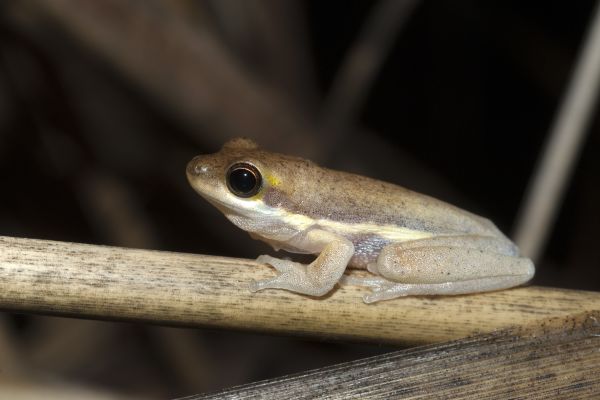
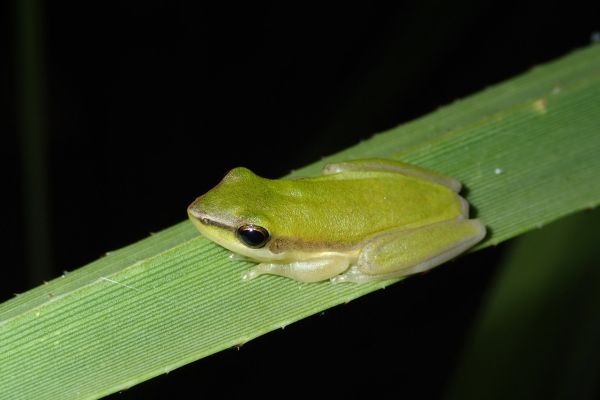
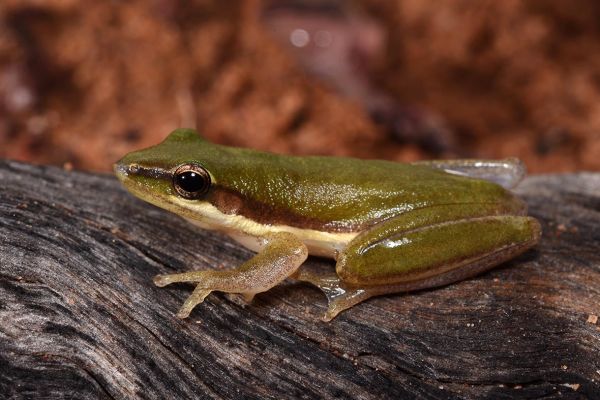
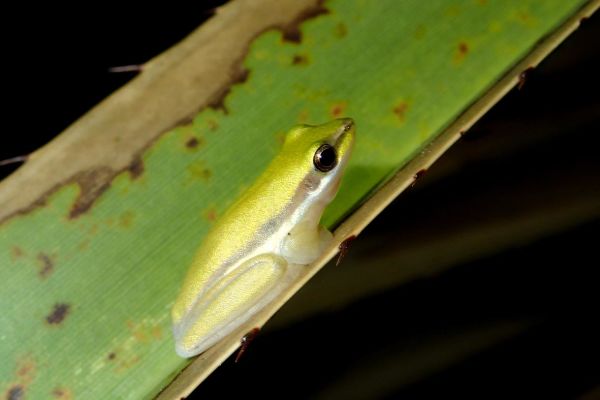
A small species of frog reaching up to 3 cm in body length. It has a green or brown back, sometimes with small brown patches, and a wide bronze stripe from the tip of the snout to near the groin if the back is green. There is a white stripe that follows underneath the bronze stripe, but passes under the eye instead of through it. The belly is white. The groin and thighs have an orange patch.
The pupil is horizontal and the iris is gold. Fingers are slightly webbed and toes are about three-quarters webbed, both with small discs.
This species was previously known as Litoria bicolor.
Habitats
Occurs in Melaleuca swamps, temporary or permanent lagoons, and ponds that have emergent reeds.
Breeding Biology
Eggs are laid as many small clusters that are attached to vegetation near the surface of the water in permanent or temporary ponds, lagoons, and swamps. Tadpoles can reach a total length of 4 cm, and have a translucent yellow-gold back. If viewed from the side, the lower half of the body will be white or silver, clearly separated from the colour of the back. Tadpoles often remain near the surface of the water, and take two and a half months to develop into frogs.
Breeds during summer rains.
Similar Species
Looks similar to Drymomantis fallax and Mahonabatrachus microbelos in its distribution, but has a different back colour pattern to Mahonabatrachus microbelos. It can most easily be distinguished from Drymomantis fallax by its different call.