Rhyaconastes booroolongensis
Booroolong Frog
Distribution
:quality(60)/https%3A//media.frogid.net.au/media/dd/images/qporyhhynjdwdljp7cmh.b28fdbe.png)
Conservation Status
What does it mean?
 Federal Conservation Status (EPBC Act)
IUCN Red List
 Endangered
Frog Calls
Call recorded by Chris Sanderson
Call recorded by Phil Spark
Call recorded by Jodi Rowley
Calling Period
- Jan
- peak
- Feb
- yes
- Mar
- No calling
- Apr
- No calling
- May
- No calling
- Jun
- No calling
- Jul
- No calling
- Aug
- yes
- Sep
- peak
- Oct
- peak
- Nov
- peak
- Dec
- peak
Species Information
Description
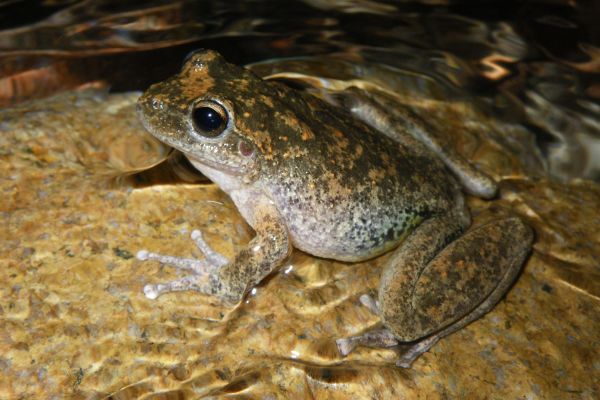
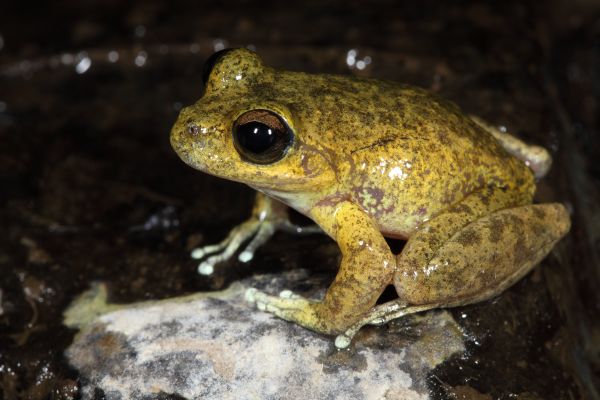
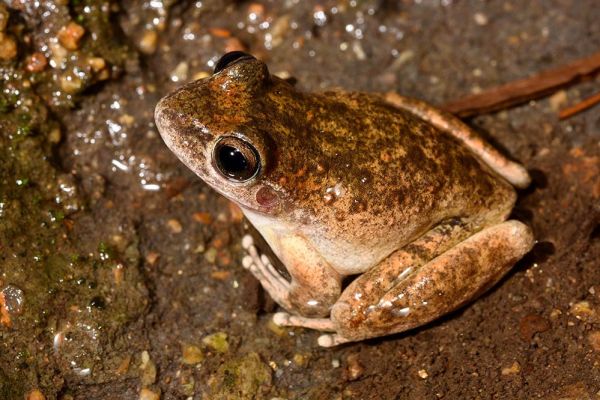
A medium-sized species of frog reaching up to 5.5 cm in body length. It has a grey-brown or reddish-brown back, with dark or light brown spots and patches. The belly is white, and the male has a dark throat.
The pupil is horizontal and the iris is gold. Fingers are slightly webbed and toes are nearly fully webbed, both with large white discs.
This species was previously known as Litoria booroolongensis.
Habitats
Occurs only in and near flowing rocky streams near mountainous regions.
Breeding Biology
Eggs are laid as a single cluster that is attached to rocks in stream pools or shallow flowing sections. Tadpoles can reach a total length of up to nearly 6 cm, and are brown or sandy-brown in colour. They use their mouthparts to stick to rocks in order to avoid being swept away by flowing water, and take at least two and a half months to develop into frogs.
Breeds during spring and summer.
Similar Species
Looks similar to Litoria latopalmata and Rhyaconastes lesueuri in its distribution, but has more toe webbing.