Dryopsophus citropa
Blue Mountains Tree Frog
Distribution
:quality(60)/https%3A//media.frogid.net.au/media/dd/images/qnq7vgn7iqqnoqixzjvw.e534164.png)
Conservation Status
What does it mean?
 Federal Conservation Status (EPBC Act)
IUCN Red List
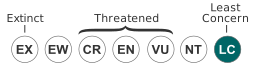 Least Concern
Frog Calls
Call recorded by Jodi Rowley
Calling Period
- Jan
- yes
- Feb
- yes
- Mar
- possible
- Apr
- possible
- May
- possible
- Jun
- No calling
- Jul
- possible
- Aug
- yes
- Sep
- peak
- Oct
- peak
- Nov
- peak
- Dec
- peak
Species Information
Description
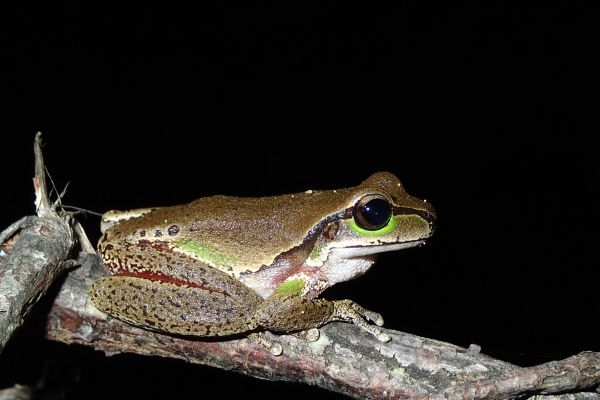
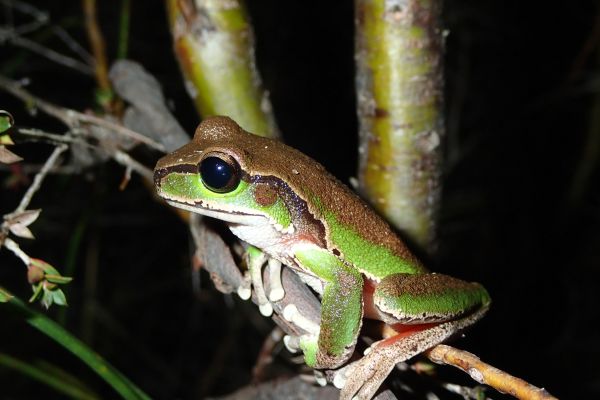
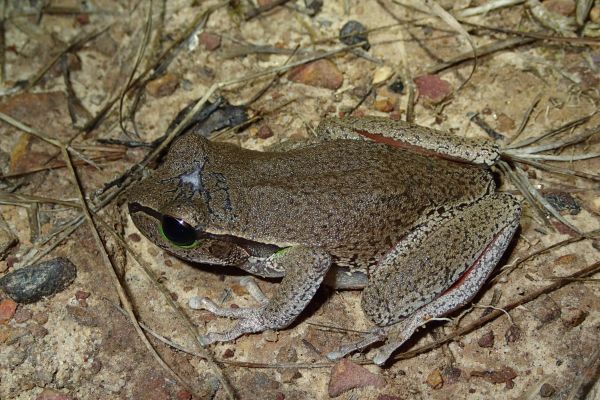
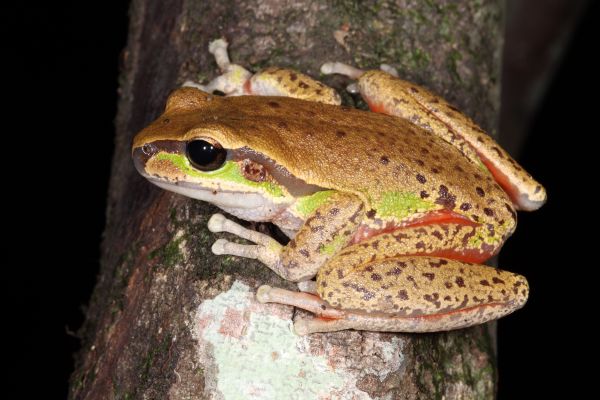
A large species of frog reaching up to 6.5 cm in body length. It has a light or dark brown back, sometimes with small darker spots and several small green patches. The sides are green. There is a dark brown stripe from the tip of the snout to past the arm, above which there is a narrow white stripe that becomes mottling on the sides. The belly is white.
The pupil is horizontal and the iris is gold. The armpits, groin, and inner sides of the lower legs are bright red. Fingers are unwebbed and toes are half webbed, both with large discs.
This species was previously known as Litoria citropa.
Habitats
Occurs near streams in forest with sandstone ridges.
Breeding Biology
Eggs are laid as a single layer that sinks to the bottom of stream pools. Tadpoles can reach a total length of up to 4.5 cm and are gold or gold-brown in colour. They often remain at the bottom of the water bodies, and take two to four months to develop into frogs.
Breeds during late winter to early summer.
Similar Species
Looks very similar to Dryopsophus daviesae and Dryopsophus subglandulosus near its distribution, but these two species have a green tympanum instead of brown.