Spicicalyx eucnemis
Fringed Tree Frog
Distribution
:quality(60)/https%3A//media.frogid.net.au/media/dd/images/v7udxjqcrubo4mo5cn21.df18083.png)
Conservation Status
What does it mean?
 Federal Conservation Status (EPBC Act)
IUCN Red List
 Least Concern
Frog Calls
Call recorded by Keith McDonald
Calling Period
- Jan
- yes
- Feb
- yes
- Mar
- possible
- Apr
- possible
- May
- possible
- Jun
- possible
- Jul
- possible
- Aug
- possible
- Sep
- yes
- Oct
- yes
- Nov
- yes
- Dec
- yes
Species Information
Description
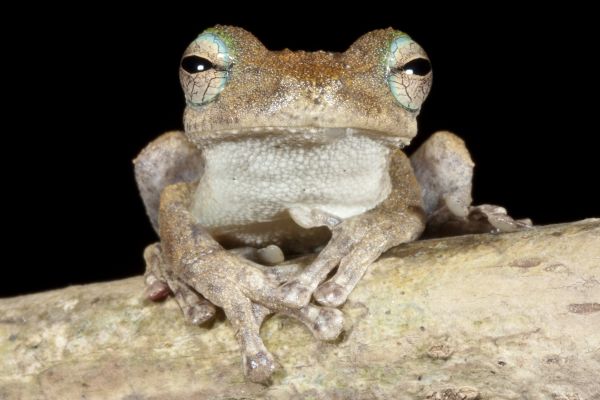
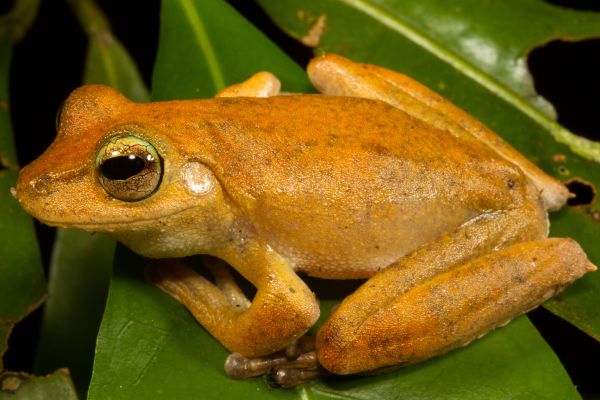
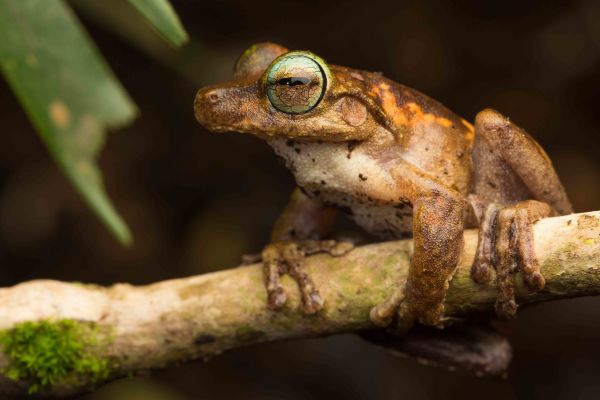
A large species of frog that can reach up to 7.5 cm in body length. It has a grey-brown, gold-brown, reddish-brown or green back, with or without cream-coloured or green patches. The belly is white.
The pupil is horizontal, and the iris is gold with a distinct green crescent in the upper half. The legs and forearms are serrated on the outer side, and there is a large spike on each heel. Fingers are half-webbed and toes are nearly fully webbed, both with large discs.
This species was previously known as Litoria eucnemis.
Habitats
Occurs near rocky streams in rainforest.
Breeding Biology
Eggs have not been described, but are likely to be similar to those of Litoria serrata and attached to rocks in stream pools. Tadpoles can reach a total length of up to nearly 4 cm, and are gold-brown in colour. They often remain at the bottom of water bodies. It is unknown how long they take to develop into frogs.
Breeds during spring and summer, but possibly any time of year after rain.
Similar Species
Does not look similar to any other species in its distribution.