Rawlinsonia eungellensis
Eungella Whirring Tree Frog
Distribution
:quality(60)/https%3A//media.frogid.net.au/media/dd/images/vhtciv1kolbrg3fnjv0k.790ee9f.png)
Conservation Status
What does it mean?
 Federal Conservation Status (EPBC Act)
IUCN Red List
 Not Evaluated
Frog Calls
Call recorded by Stephen Mahony
Call recorded by Stephen Mahony
Calling Period
- Jan
- peak
- Feb
- yes
- Mar
- possible
- Apr
- possible
- May
- no
- Jun
- no
- Jul
- no
- Aug
- no
- Sep
- possible
- Oct
- possible
- Nov
- peak
- Dec
- peak
Species Information
Description
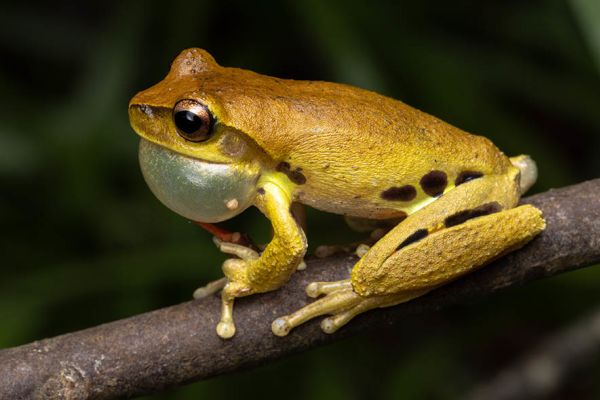
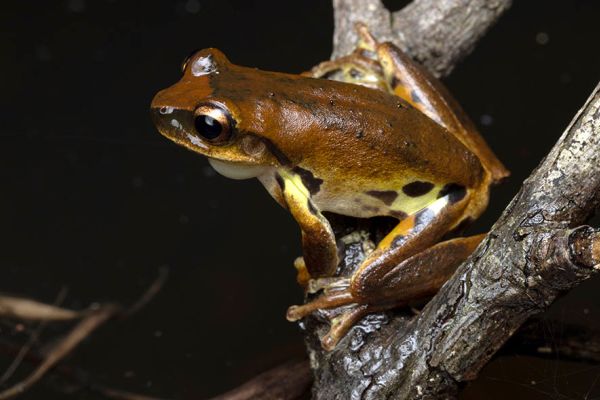
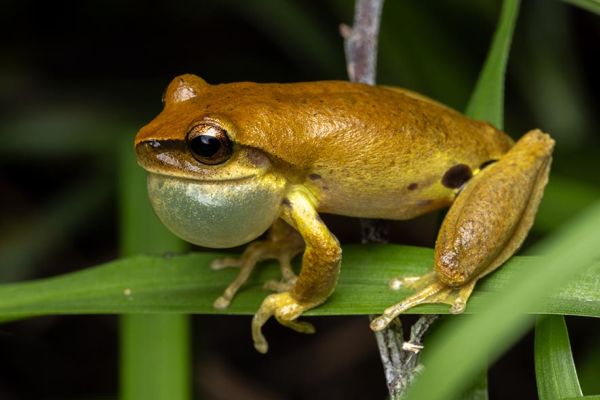
A medium-sized species of frog reaching up to 4 cm in body length. It has a tan, cream-brown or bronze back with a wide brown longitudinal stripe along the middle that starts between the eyes. There is a brown stripe from the nostril to past the arm. The belly is cream-white and the male has a cream-white vocal sac. The pupil is horizontal and the iris is copper-gold. The groin is yellow or orange with prominent black spots on the margins. Often black patterning is spread across the backs of thighs, with variable dark patches on the undersides of thighs. Fingers are long and unwebbed with prominent discs, and toes are three-quarters webbed with small discs.
Until 2025, this species was considered to be a disjunct population of the Southern Whirring Tree Frog (Rawlinsonia revelata), but through a combination of genetic, morphological and bioacoustic analyses, including the use of FrogID recordings, this population was revealed to be a distinct species.
This species was previously known as Litoria eungellensis.
Habitats
Slow-flowing upland rainforest creeks.
Breeding Biology
Eggs are laid singly or in small rows, and are attached to vegetation near the surface of the water in dams or small pools adjacent to slow-flowing streams. Tadpoles can reach a total length of up to nearly 6 cm and are dark brown in colour, often with a bluish sheen. They often remain near the surface of water bodies, and take around three months to develop into frogs. Breeds during spring to summer.
Similar Species
Does not look similar to any species within its distribution.