Drymomantis olongburensis
Wallum Sedge Frog
Distribution
:quality(60)/https%3A//media.frogid.net.au/media/dd/images/ajqcaefzeyqv6eecsh8v.a1b4001.png)
Conservation Status
What does it mean?
 Federal Conservation Status (EPBC Act)
IUCN Red List
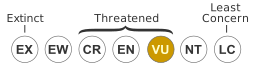 Vulnerable
Frog Calls
Call recorded by H.B. Hines QPWS
Call recorded by H.B. Hines QPWS
Calling Period
- Jan
- yes
- Feb
- yes
- Mar
- yes
- Apr
- yes
- May
- possible
- Jun
- No calling
- Jul
- No calling
- Aug
- possible
- Sep
- yes
- Oct
- peak
- Nov
- peak
- Dec
- yes
Species Information
Description
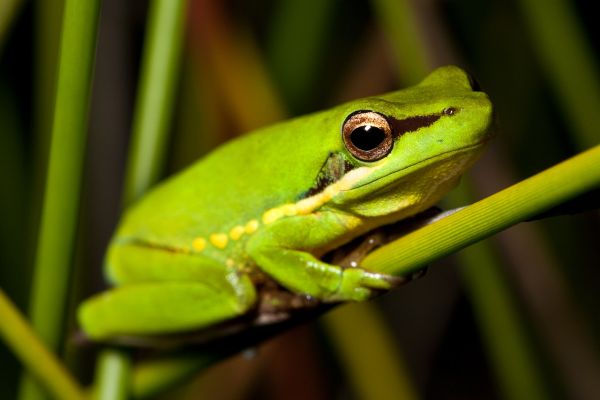
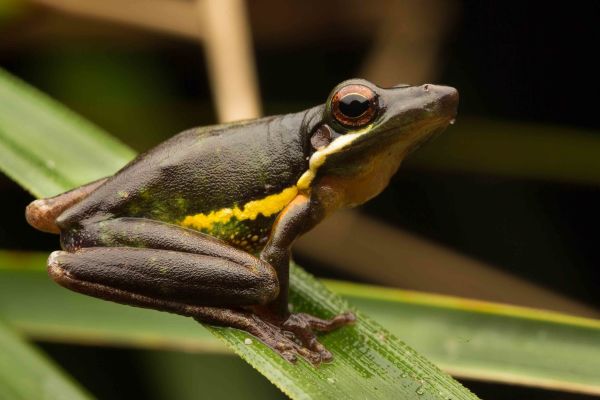
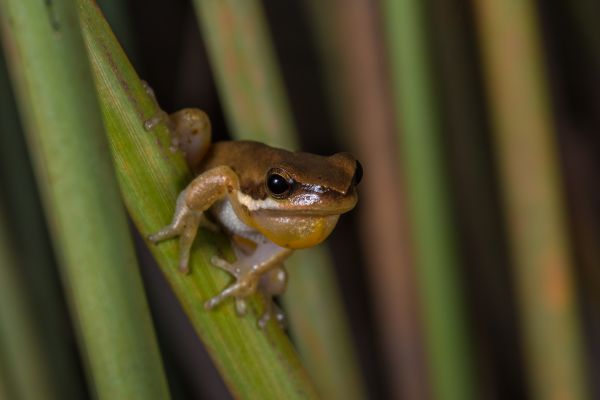
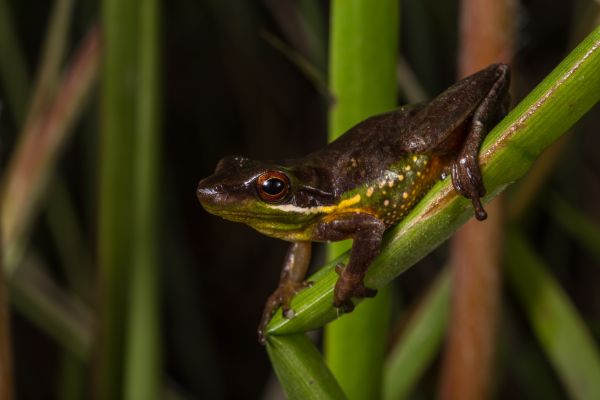
A small species of frog reaching up to 3.5 cm in body length. It has a bright green or bronze back, with a dark brown stripe from the tip of the snout to the side. There is a white stripe from under the eye to the arm, which becomes spots as it reaches the side. The belly is white. The male has brown flecks on the throat, while the female often has a green throat.
The pupil is horizontal and the iris is gold. The backs of the thighs are blue, orange, or purple. Fingers are slightly webbed and toes are about two-thirds webbed, both with small discs.
This species was previously known as Litoria olongburensis.
Habitats
Occurs in permanent ponds, creeks, lakes and swamps with emergent reeds and acidic water near wallum with sandy soils.
Breeding Biology
Eggs have not been described, but are likely to be similar to those of Litoria fallax and are attached under the surface of the water to reeds in permanent ponds, swamps, and lakes. Tadpoles can reach a total length of up to 4.5 cm and are dark brown in colour. If viewed from the side, the lower half of the body will be white or silver, clearly separated from the colour of the back. They often remain near the surface of water bodies, and take around 3 months to develop into frogs.
Breeds during spring and summer after rain.
Similar Species
Looks very similar to Drymomantis cooloolensis and Drymomantis fallax in its distribution, but has brown flecks on the throat.