Litoria subglandulosa
New England Tree Frog
Distribution
:quality(60)/https%3A//media.frogid.net.au/media/dd/images/g4qtvuwsve3pfq5rjeai.a21f0b4.png)
Conservation Status
What does it mean?
 Federal Conservation Status (EPBC Act)
IUCN Red List
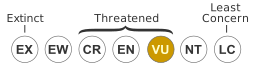 Vulnerable
Frog Calls
Call recorded by Jodi Rowley
Calling Period
- Jan
- yes
- Feb
- yes
- Mar
- yes
- Apr
- possible
- May
- possible
- Jun
- possible
- Jul
- No calling
- Aug
- yes
- Sep
- yes
- Oct
- peak
- Nov
- peak
- Dec
- peak
Species Information
Description
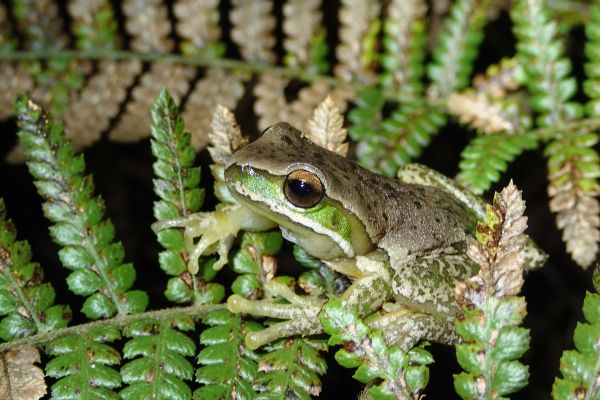
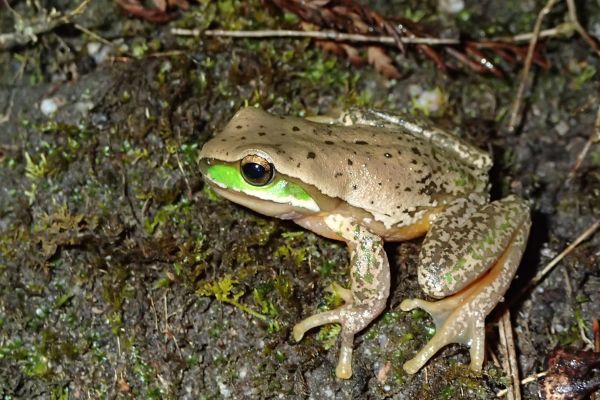
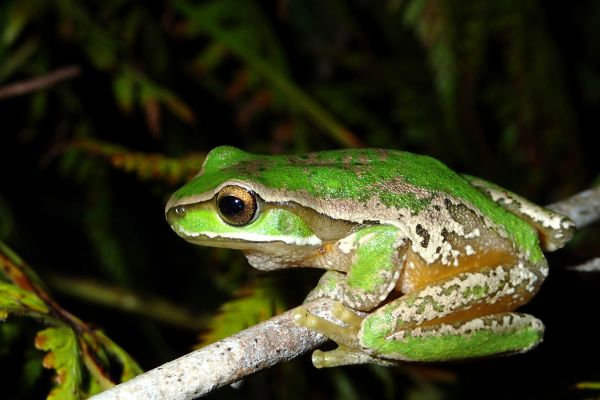
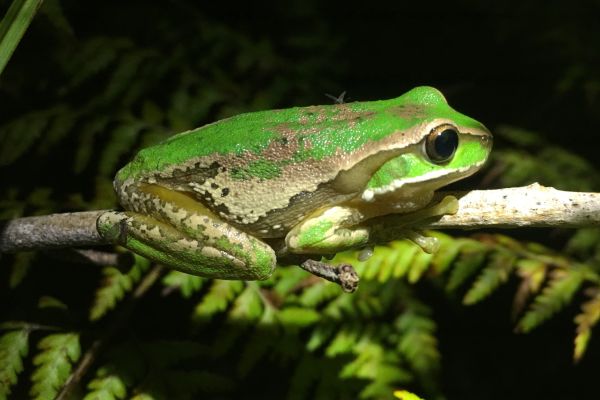
A medium-sized species of frog reaching up to 5 cm in body length. It has a green back with darker brown mottling, or a light-brown back with lime-green mottling. There is a dark brown stripe from the tip of the snout to the side, and often a light brown or gold stripe that follows above. There is also a cream-coloured stripe along the upper lip. There is often a green patch on the side of the head. The belly is white. The pupil is horizontal and the iris is gold. The armpits, groin and backs of the legs are yellow. Fingers are unwebbed and toes are two-thirds webbed, both with large discs. A taxonomic revision of the Australian treefrogs published in June 2025 has suggested that this species be placed in the genus Dryopsophus, resulting in the proposed species name of Dryopsophus subglandulosus.
Habitats
Occurs near streams in rainforest and wet sclerophyll forest.
Breeding Biology
Eggs are laid as a single clump attached to rocks under the surface of the water in stream pools. Tadpoles can reach a total length of up to nearly 4 cm and are gold-brown or dark brown in colour. They often remain at the bottom of water bodies, and take three to four months to develop into frogs. Breeds during spring to summer.
Similar Species
Looks very similar to Litoria citropa and Litoria daviesae near its distribution, but has a green tympanum compared to the brown tympanum present in Litoria citropa, while the easiest way to distinguish it from Litoria daviesae is by distribution.