Mixophyes fasciolatus
Great Barred Frog
Distribution
:quality(60)/https%3A//media.frogid.net.au/media/dd/images/tzuramvcu3ortdtvmvys.ecf00c2.png)
Conservation Status
What does it mean?
 Federal Conservation Status (EPBC Act)
IUCN Red List
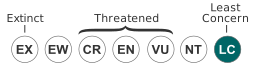 Least Concern
Frog Calls
Call recorded by Jodi Rowley
Call recorded by Eric McKenzie
Call recorded by Stephen Mahony
Calling Period
- Jan
- peak
- Feb
- peak
- Mar
- peak
- Apr
- yes
- May
- No calling
- Jun
- No calling
- Jul
- possible
- Aug
- possible
- Sep
- yes
- Oct
- yes
- Nov
- yes
- Dec
- yes
Species Information
Description
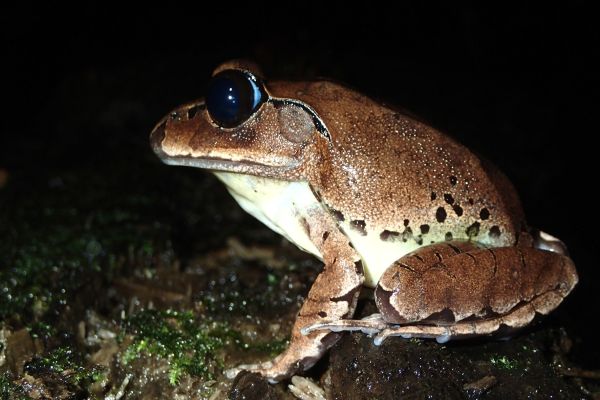
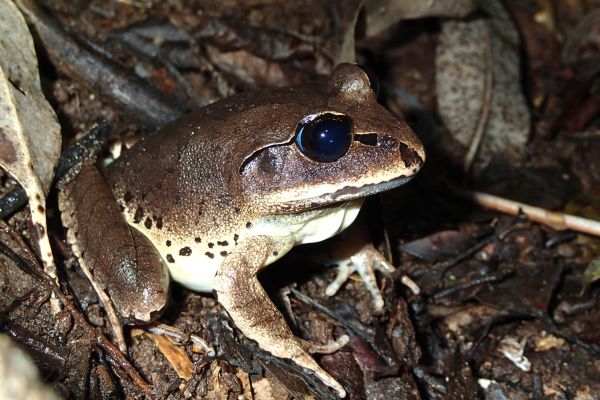
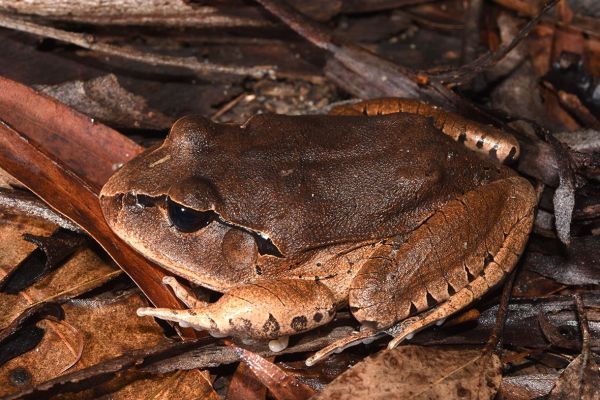
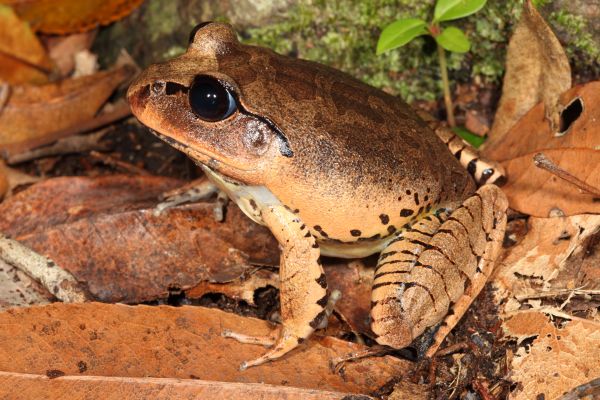
A large species of frog reaching up to 10 cm in body length. It has a copper-brown, yellow-brown, or brown back, with several darker patches along the middle that sometimes form a continuous stripe that starts as a Y-shape between the eyes. There is a black stripe from the nostril to past the eye, and a black triangular patch on the tip of the snout. The sides are light brown or cream coloured, with black spots. The belly is white.
The pupil is vertical and the iris is dark brown. The legs and arms have dark horizontal bars. Fingers are unwebbed and toes are three-quarters webbed, both without discs.
Habitats
Occurs near streams and in leaf litter in rainforest and wet sclerophyll forest.
Breeding Biology
Eggs are kicked out of the water by the female and stick onto muddy banks and rock faces next to stream pools. The tadpoles then drop into the water after hatching. Tadpoles can reach a total length of up to 8.5 cm, and are gold-brown or grey-brown in colour. They often remain on the bottom of water bodies and take around 12 months to develop into frogs.
Breeds during spring to autumn after rain.
Similar Species
Looks similar to Mixophyes balbus, Mixophyes australis, Mixophyes fleayi and Mixophyes iteratus in its distribution, but has a different eye colour to all of these species.