Pseudophryne occidentalis
Western Toadlet


Distribution
:quality(60)/https%3A//media.frogid.net.au/media/dd/images/okikcrwgfnwdstnppebt.1bc5e4b.png)
Conservation Status
What does it mean?
 Federal Conservation Status (EPBC Act)
IUCN Red List
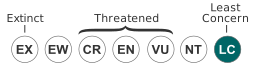 Least Concern
Frog Calls
Call recorded by Dale Roberts
Calling Period
- Jan
- yes
- Feb
- yes
- Mar
- yes
- Apr
- yes
- May
- yes
- Jun
- possible
- Jul
- possible
- Aug
- possible
- Sep
- possible
- Oct
- possible
- Nov
- possible
- Dec
- yes
Species Information
Description
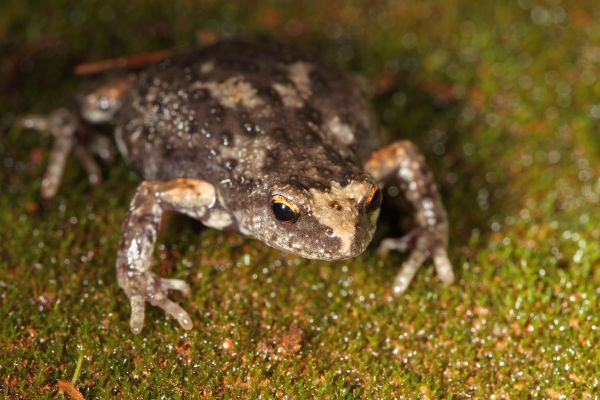
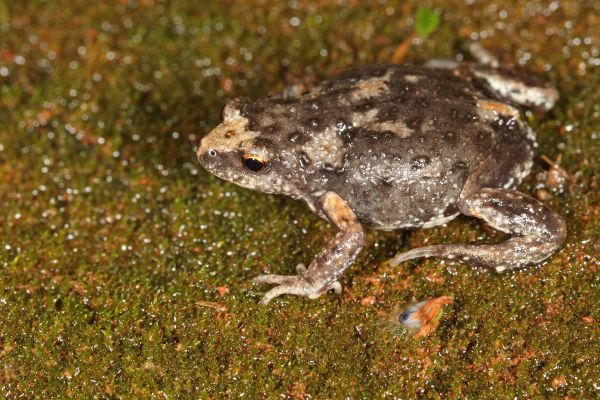
A small species of frog reaching up to 3.5 cm in body length. It has a grey-brown or dark grey back, with darker patches or mottling. There is often a pale orange or light brown patch on the head and the lowermost part of the back. The belly has marbling which is black and white, or grey.
The pupil is horizontal, and the iris is gold. The tops of the arms at the shoulder and the backs of the thighs are often pale orange or light brown. Fingers and toes are unwebbed, both without discs.
Habitats
Occurs in arid areas with sedges, Melaleuca plants, and granite outcrops.
Breeding Biology
Eggs are laid as one small cluster on land in burrows with sandy or clay soil. The nest is guarded by the male, as it is with other Pseudophryne species. Tadpoles can reach a total length of up to 3.5 cm, and are brown or pale gold in colour. They are released into water bodies after the nest is flooded by rain, and take around one to two months to develop into frogs once released.
Breeds during summer after rain.
Similar Species
Looks very similar to Pseudophryne guentheri, but has metatarsal tubercles that are further apart and less equal in size.