Rheobatrachus vitellinus
Northern Gastric Brooding Frog
Distribution
:quality(60)/https%3A//media.frogid.net.au/media/dd/images/etxm0s6dl5pihiivmdkg.08f63c5.png)
Conservation Status
What does it mean?
 Federal Conservation Status (EPBC Act)
IUCN Red List
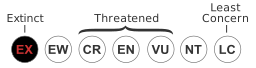 Extinct
Frog Calls
Call recorded by Keith McDonald
Calling Period
- Jan
- No calling
- Feb
- No calling
- Mar
- No calling
- Apr
- No calling
- May
- No calling
- Jun
- No calling
- Jul
- No calling
- Aug
- No calling
- Sep
- No calling
- Oct
- yes
- Nov
- yes
- Dec
- No calling
Species Information
Description
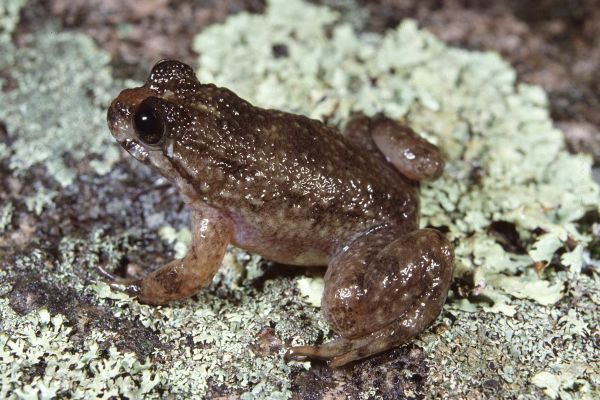
A large species of frog reaching up to 8.5 cm in body length. It had a brown back with darker brown patches. The belly was white or grey, with yellow on the lower half. The pupil was vertical, and the iris was gold with distinct, thin black veins throughout. Fingers were unwebbed and claw-shaped; toes were fully webbed with small discs. It was one of only three Australian species known to be almost entirely aquatic. Its large eyes, very short snout, and fully webbed toes were all adaptations for living under the water.
Habitats
Occurred in rocky streams in rainforest. It often remained in the water and was always found very close to streams.
Breeding Biology
An amazing process whereby fertilised eggs were swallowed by the female. Tadpoles developed inside the stomach; it is unknown how long they took to develop into frogs there. The little frogs were then ejected from the mouth of the female. Breeding was recorded during spring.
Similar Species
Does not look similar to any other species in its former distribution.