FrogID AI: Faster feedback on your frog recordings
What is FrogID AI?
We are excited to introduce FrogID AI – a new artificial intelligence (AI) feature within the FrogID App that is helping us to review your submissions and provide much faster feedback on the presence of frogs!
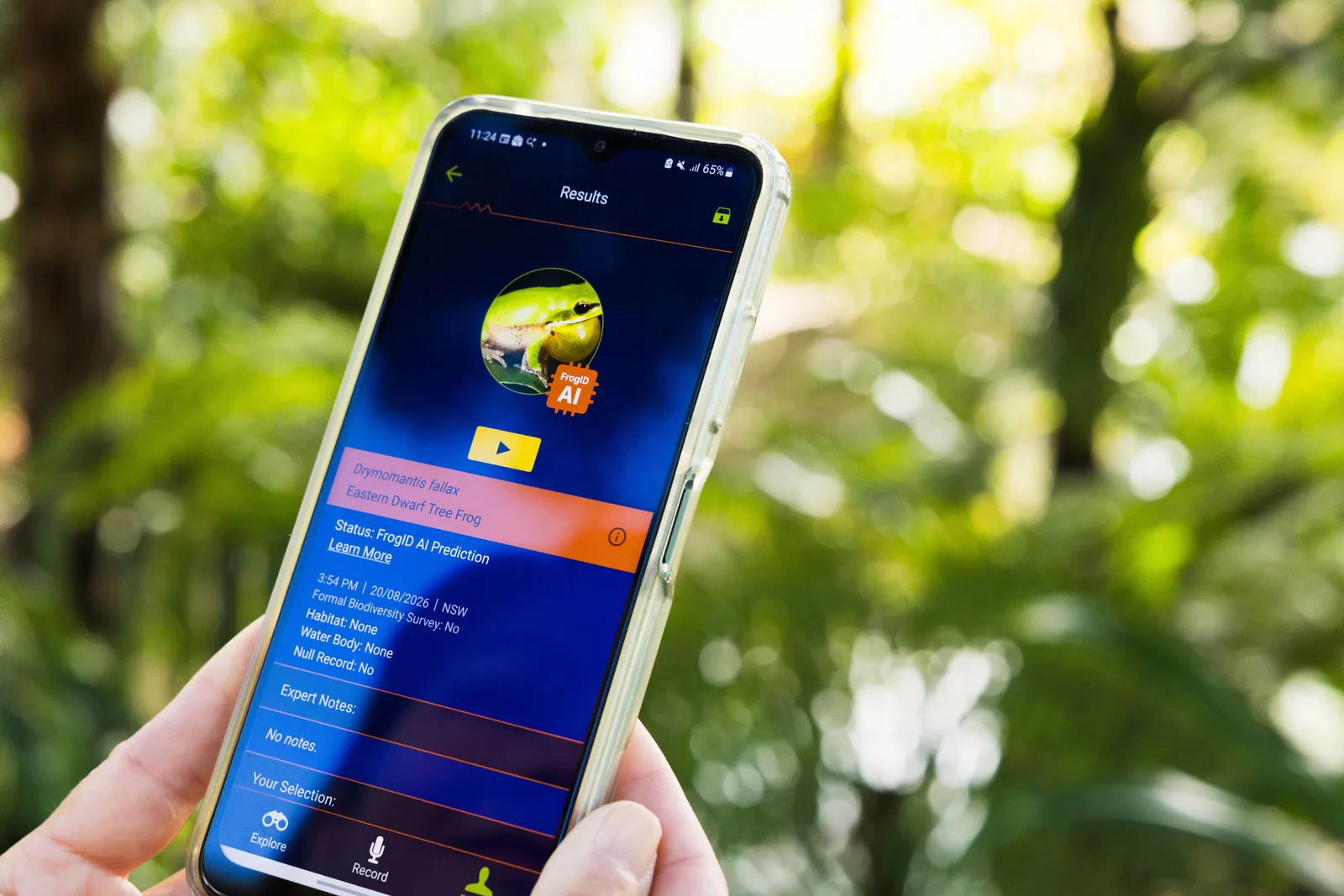
With this new feature, when you submit a recording to FrogID, our AI will automatically review the submission using Machine Learning (ML) models trained with our FrogID data to provide a rapid prediction if there is one or more common frog species calling in your recording. FrogID AI aims to improve our user engagement and is intended for learning purposes, with all recordings still being verified by our human frog call experts for scientific accuracy.
How does it work?
Our FrogID AI model has been trained using FrogID's extensive database of frog call recordings collected by the FrogID community across Australia. It has learned to recognise the unique call patterns of different frog species, so when you submit a recording, it compares the sounds it hears with patterns it has been trained to recognise and generates a species suggestion.
When FrogID AI matches a frog species, your recording will receive the FrogID AI label and the AI match will appear in your FrogID AI Prediction list. This means you can receive more rapid feedback when your capture is submitted to the project.
Important: FrogID AI version 1.0 (Beta) uses the audio recording when providing a prediction. Always wait for expert verification. FrogID AI version 1.0 is currently available for 16 frog species and provides indicative species suggestions. We will continue to improve and expand the model over time.
Which frogs can FrogID AI identify?
Currently, FrogID AI version 1.0 (Beta) is trained to identify 16 of Australia's commonly recorded frog species, and the introduced Cane Toad:
- Common Eastern Froglet (Crinia signifera)
- Striped Marsh Frog (Limnodynastes peronii)
- Motorbike Frog (Ranoidea/Litoria moorei)
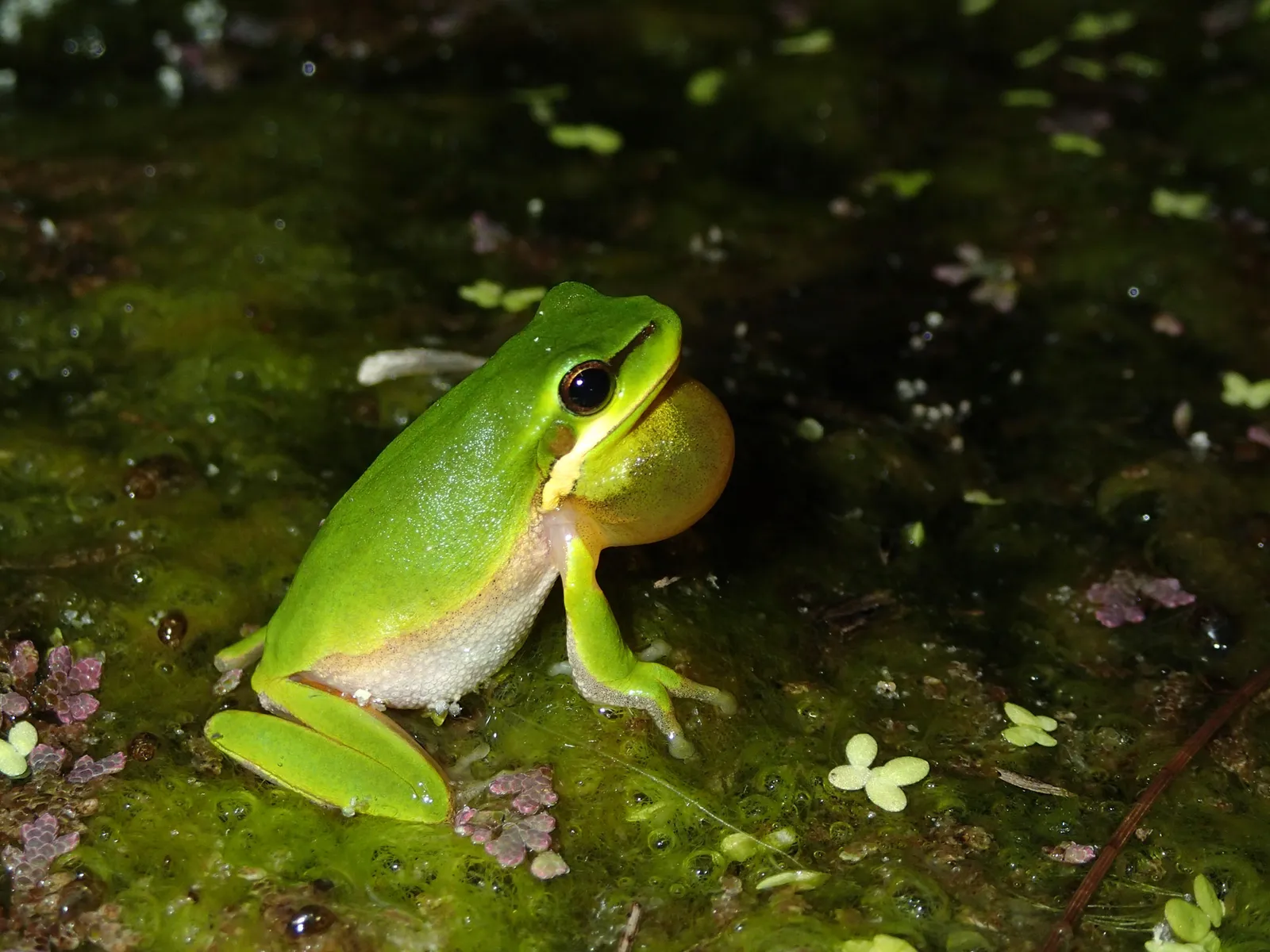
- Eastern Dwarf Tree Frog (Drymomantis/Litoria fallax)
- Spotted Marsh Frog (Limnodynastes tasmaniensis)
- Eastern Sign-bearing Froglet (Crinia parinsignifera)
- Eastern Banjo Frog (Limnodynastes dumerilii)
- Green Tree Frog (Pelodryas/Litoria caerulea)
- Brown Tree Frog (Rawlinsonia/Litoria ewingii)
- Whistling Tree Frog (Rawlinsonia/Litoria verreauxii)
- Red Tree Frog (Colleeneremia/Litoria rubella)
- Rattling Froglet, Crinia glauerti
- Peron's Tree Frog, Pengyilleyia/Litoria peronii
- Western Laughing Tree Frog (Pengyilleyia/Litoria ridibunda)
- Tusked Frog (Adelotus brevis)
- Cane Toad (Rhinella marina; introduced species)
If your recording contains one of these species calling clearly (for example, with little background noise), you're likely to receive an AI prediction. Importantly, just because a frog species in the FrogID AI model is not predicted, it does not mean that it isn’t present in your recording.
Please always wait for expert verification by the FrogID team. An AI prediction is just that - our frog call experts will continue to validate recordings as they always have.
Will the AI always be correct?
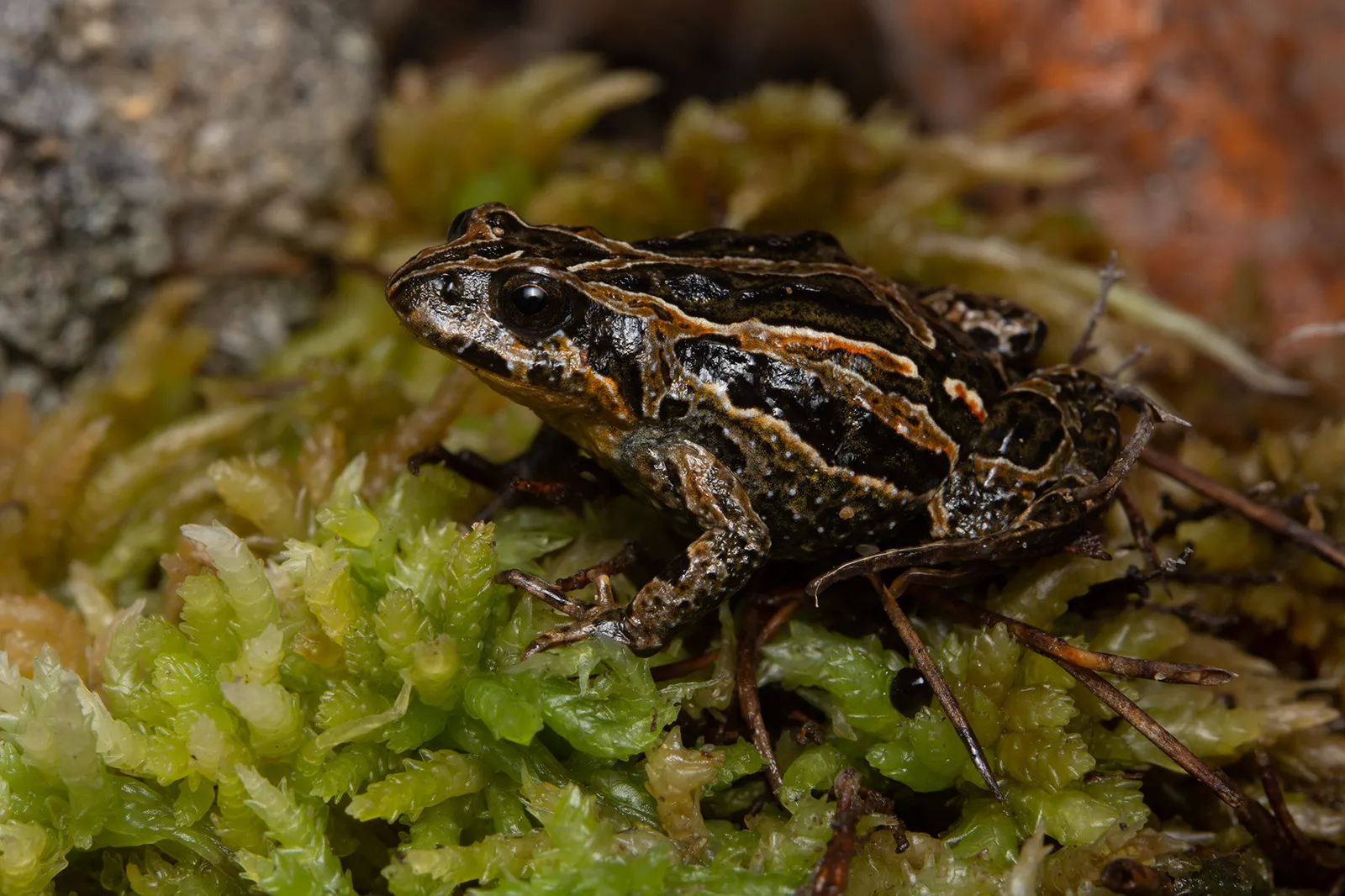
No, and that is expected. While our AI performs well for the species it has learned, it won’t always be correct. The AI can sometimes:
- Misidentify species that sound similar. For example, Beta version 1.0 includes Rawlinsonia/Litoria ewingii and Rawlinsonia/Litoria verreauxii which are very similar in sound and the AI finds challenging to distinguish.
- Struggle with noisy recordings or when multiple frogs are calling at once
- Miss frogs in noisy or faint recordings. Even if a species included in the model is not predicted, it may still be present in your recording.
The AI is designed to provide fast feedback on your recordings to support engagement, even when it is less certain. The model will continue to be refined and improved as resources become available. That is why all AI predictions are clearly marked and will still be reviewed by our human expert validators.
We understand users may notice mistakes, and this is expected in Beta version 1.0.
For guidance on what to do with AI predictions, see the “What should I do with AI predictions?” section.
Note: FrogID AI predictions are for engagement and educational purposes only. They do not constitute verified evidence of species presence or absence, and should not be used for regulatory, environmental, or compliance purposes. Only expert-verified recordings from the FrogID team can be relied upon.
Why are we using AI?
FrogID receives thousands of recordings each week from dedicated citizen scientists. Our AI technology helps us:
- Give faster feedback to our users, reducing waiting time
- Support conservation efforts by quickly identifying potential Cane Toad recordings
- Increase the capacity of the FrogID project by scaling up the identification of frogs
- Enhance user engagement, making participating more rewarding and interactive
While there is strong interest in using AI to generate scientifically verified data, FrogID AI version 1.0 is designed for engagement and learning only. All recordings continue to be manually reviewed by our frog call experts before being added to the official dataset. This ensures data quality while we continue to develop this exciting new feature as resources and funding allow.
Data privacy and training ethics
FrogID takes your privacy, the ethical use of data, and the environmental footprint of AI seriously. Your FrogID submissions remain yours, and your recordings and data submitted to the project are for the Australian Museum’s FrogID project purposes only, as outlined in our Terms of Use and Privacy Policy. We do not include personal information in the training of the models, or share or sell your data to unrelated external projects. Your FrogID audio submissions are only used to train FrogID AI species identification models and not for any other AI applications.
We are also conscious of the environmental footprint of AI. We build FrogID AI on existing machine‑learning models rather than training new ones from scratch, and we monitor usage to minimise energy consumption. Our priority is to balance community science innovation with ethical and environmentally responsible practices.
If you have questions about how your data is used or managed by FrogID, feel free to contact us.
What should I do with FrogID AI predictions?
When you see a FrogID AI badge next to your submission:
- Learn about the species identified by exploring the information provided
- Keep recording to help improve the AI and contribute to frog conservation
- Know that AI predictions are not final identifications. They may be incorrect or miss species present in your recording
- Only rely on expert- verified identifications for environmental decision-making
- Don’t worry if the AI gets it wrong – you do not need to report errors. Every recording is reviewed by our experts before it’s confirmed and added to the official database.
Your recordings are incredibly valuable for science, conservation, and understanding frogs across Australia – even when the AI doesn’t get it right.
Can I use FrogID AI in my own projects?
Yes! The development of FrogID AI was funded through the Australian Government’s Innovation in Biodiversity Monitoring grant. We are excited to share this feature and make it available to the broader conservation community.
The initial FrogID AI model is available as an open-source project that you can use in your own research, education or conservation projects:
https://github.com/austmus/frogid-ml-audio-classifier
We encourage researchers, educators, and conservation groups to explore and build upon this work.
A quick note about responsible use
FrogID AI is a powerful tool, but like all machine-learning models, it has limitations. The model may misidentify species, especially in challenging acoustic environments or when species sound similar.
Because of this: No guarantee is given, nor responsibility taken by the authors or their institutions for errors, omissions, or any consequences arising from the use of the FrogID AI model or the results it produces. The model outputs are indicative only and should be interpreted with care, ideally alongside expert knowledge, ecological context and/or manual verification.
We hope this helps keep things clear - and that FrogID AI gives you a fun, useful, and empowering way to support frog conservation in your own projects. If you do use it, we’d love to hear about it!
What’s next?
We are working to expand the number of species FrogID AI can recognise. Your recordings are crucial – every capture you submit helps us improve and grow this tool. If we plan to change how we use AI, as we continue to refine, enhance or change FrogID AI, we will update this webpage and let you know.
Thank you for being part of FrogID and Australia’s largest frog conservation project!
Got a question? Please don’t hesitate to contact us at calls@frogid.net.au
FrogID is made possible through external funding. If you’d like to support our work, consider making a donation today [link to donation page]
Acknowledgements
FrogID AI has been supported by the Australian Government's DCCEEW Innovation in Biodiversity Monitoring program and philanthropic funding through Charities Aid Foundation America (CAF America).
We would like to thank the thousands of FrogID participants across Australia whose recordings have helped build the world's largest frog call dataset. Their contributions continue to support scientific research, biodiversity conservation, and innovations such as FrogID AI. We also thank the many Australian Museum staff and volunteers who have contributed their expertise, time and dedication to making FrogID AI possible.